
Kane County Bench Warrants Explained
A bench warrant is a court order tied to a case obligation. Utah Code §77-7-19 allows a court to issue one after a person fails to appear or pay as required by a citation. Other missed court duties may also lead to a warrant under the order or case rules, but do not assume every missed payment creates one automatically.
Use the court named on the citation or docket. Kane County Justice Court is the main route for most county traffic matters. Orderville Municipal Justice Court handles Orderville and Glendale municipal routing. Sixth District Court handles felony and class A cases.
Kane County Traffic FTA Uses Bench Warrant
Utah’s public-facing term for a citation failure-to-appear consequence is “bench warrant.” The research did not find Kane or Utah courts using “capias” as the public label, so older template language should not be applied here. A traffic warrant is linked to the citation and the court’s appearance or payment requirement.
Utah Code §77-7-19 is the current citation statute. It gives the legal frame, while the case clerk confirms what happened in a specific file.
How Kane County Bench Warrants Are Issued
The court reviews the missed obligation and may issue a bench warrant under the applicable rule or statute. The order can authorize arrest so the person returns to court. The research did not identify a countywide grace period, required warning letter, or fixed schedule that applies to every case.
When the court enters the warrant, case information may flow into Utah’s Statewide Warrants file. A later appearance, payment, or court action must also be entered before public systems reflect the change. Ask the clerk which event is required and when to check again.
Kane County Warrants Can Follow Older Court Names
Kanab City Justice Court and Big Water Justice Court no longer operate. Their case work transferred to Kane County Justice Court, so a legacy caption may remain on an older citation or online result. The current clerk can identify the successor docket and tell you whether it still controls the warrant.
Kane County Justice Court is at 76 North Main in Kanab, phone 435-644-2351. The official court page lists its jurisdiction and contact route.
See the Kane County Justice Court page.
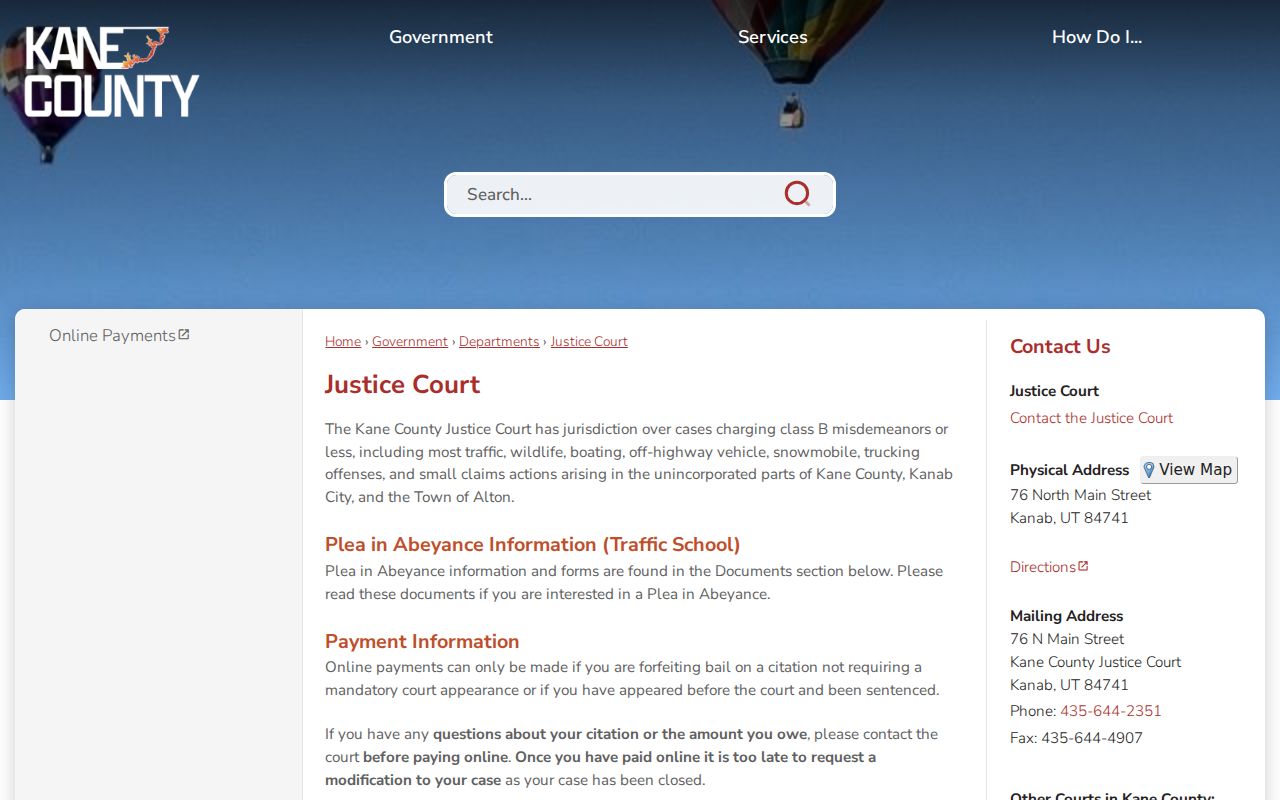
The court page helps identify the current counter for transferred matters.
Bench Warrants and Arrest Warrants Compared
A bench warrant is tied to an existing court obligation. An arrest warrant under Utah Code §77-7-5 is based on probable cause and a finding that a warrant is necessary under the statute. Both are court orders, but the reason and case stage differ. The companion arrest warrant information covers the probable-cause route.
| Feature | Bench Warrant | Arrest Warrant |
|---|---|---|
| Trigger | Missed appearance or payment required by a citation or court order. | Probable cause plus statutory necessity for a warrant instead of summons. |
| Who issues | The court handling the existing case. | A magistrate under Utah Code §77-7-5. |
| Underlying file | An existing case with an unmet obligation. | A criminal matter where the warrant process applies. |
| Next step | Ask the issuing court about appearance, payment, or recall. | Ask counsel and the issuing court about case-specific options. |
Kane County Bench Warrant Bail Terms Depend on the Order
The county Bail and Fines page lists separate terms for cash-only items, bondable warrants, and fines. Cash-only items require exact cash at the jail; the jail cannot make change or recommend a bail-bond company. A bondable label does not mean payment is the only court step.
The jail page says a magistrate sets bail within 24 hours. Release paperwork can take 1 to 4 hours after the court receives it. Use the Bail and Fines page for operational details, then verify the case terms with the clerk.
The county’s cash and bond instructions are shown here.
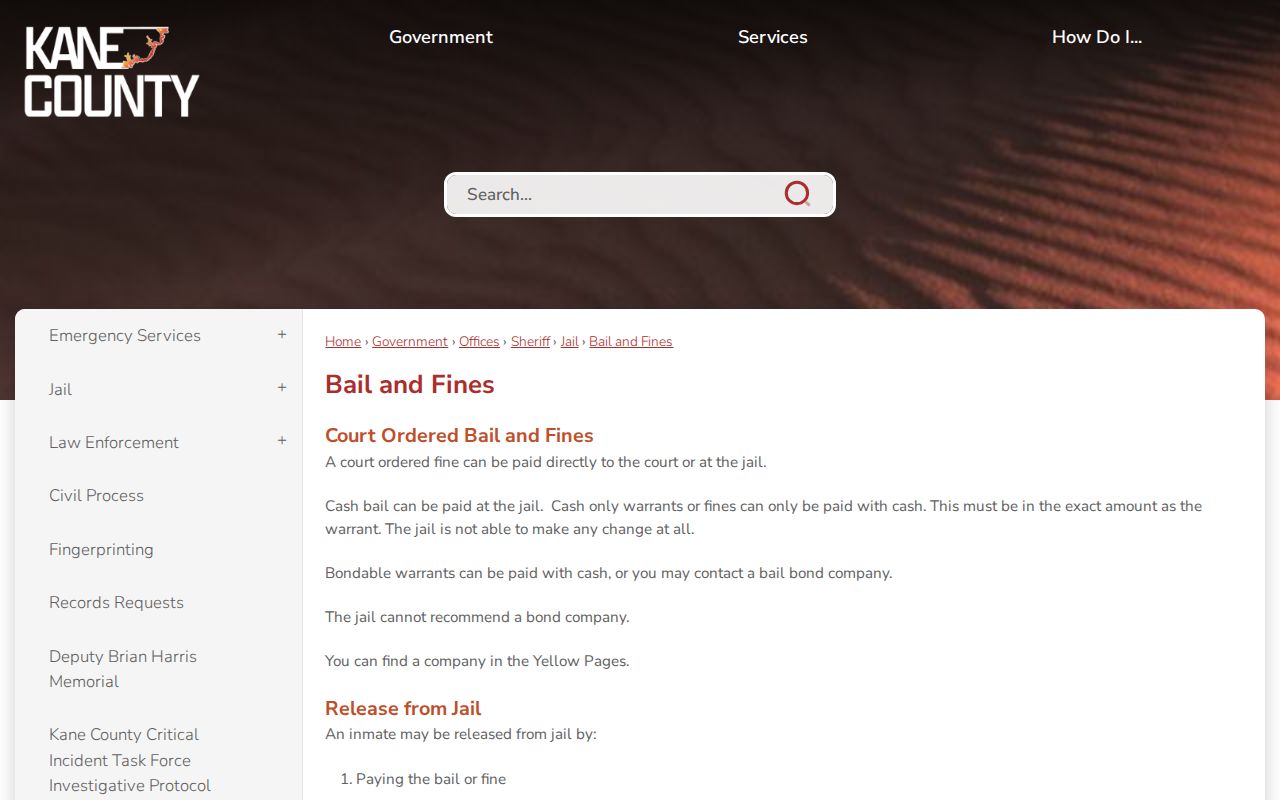
A payment route is not the same as a court decision to recall a warrant.
Resolving a Kane County Bench Warrant
Call the issuing clerk before choosing a payment or appearance route. The court may require a personal appearance, counsel, proof of compliance, a motion, or a combination. Recall means the court withdraws the warrant; quash means the court sets it aside. Neither result should be assumed from an online payment alone.
- Use the case or citation number to identify the court that issued the warrant.
- Ask whether the court requires counsel, a motion, payment, or a personal appearance.
- Follow the court’s instructions and keep proof of any payment or filing.
- Ask when the docket and Statewide Warrants file should show the court’s action.
Caution: Do not assume a missed court event has a standard fix; ask the issuing clerk and a Utah attorney about the specific case.
Kane Pretrial Services Starts After Release
Pretrial Services is a court-connected monitoring and support program, not a warrant-clearing desk. Kane County says a person released with conditions must contact the program within 24 hours. Its office is at 971 E Kaneplex Drive, phone 435-644-4316, with weekday hours listed as 8 to 4.
The Pretrial Services page describes attendance, monitoring, and support duties. A warrant question still belongs with the issuing court.
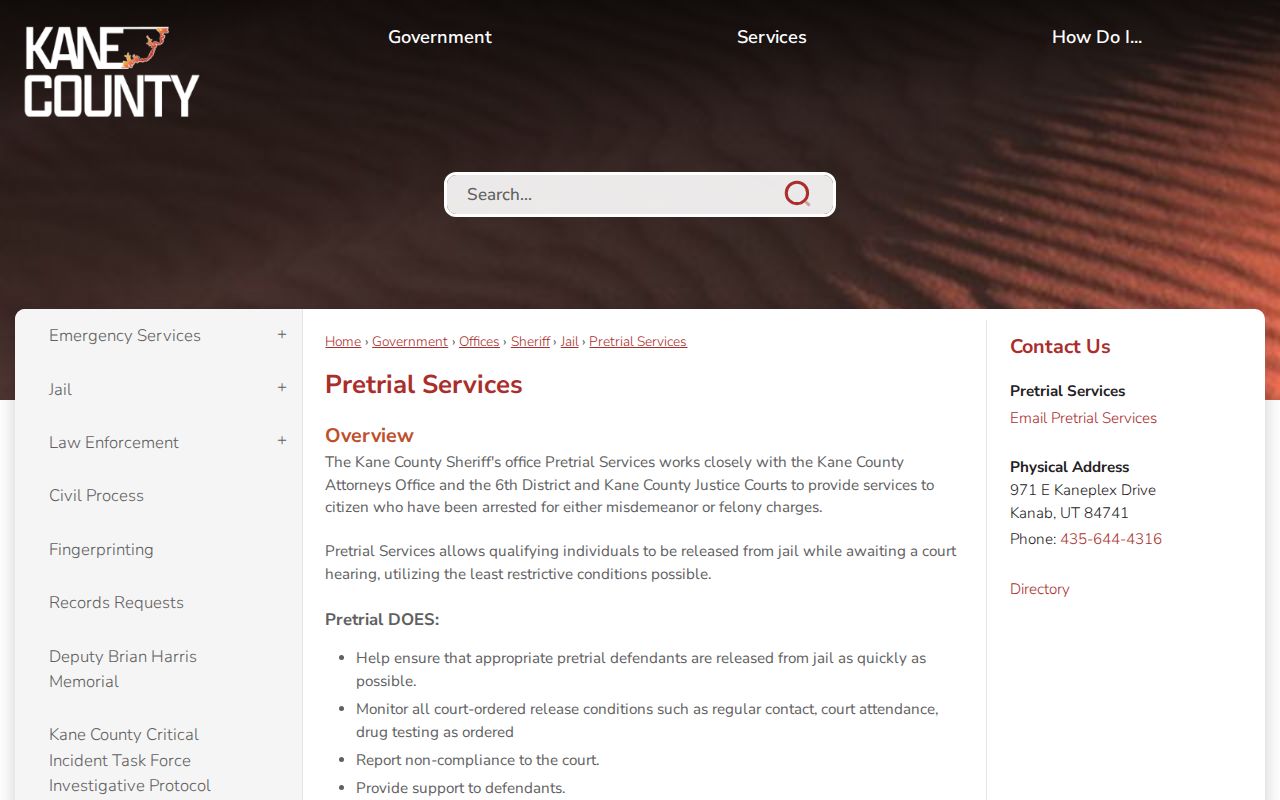
This program may matter after release, but it does not decide whether a warrant is recalled.
Finding the Court That Issued the Warrant
The court controls whether its warrant is recalled. Kane County Justice Court is the route for most county, Kanab, and Alton lower-level matters. Orderville Municipal Justice Court handles Orderville and Glendale municipal routing. Sixth District Court handles felony and class A cases; juvenile records are restricted.
If the docket uses an old Kanab or Big Water court name, ask Kane County Justice Court to find the successor case. The Sheriff can explain service or booking channels, but it cannot change the court’s order. The Kane County warrant lookup is a starting point for identifying the court.
Kane Civil Service Fees Are Not Court Fines
The Sheriff’s Civil Process schedule lists $50 for service of a bench warrant and three attempts. Those are service charges to the office, not the underlying fine, bail, or amount needed for a court resolution. A court may set different terms in the case.
Separate the source before paying: ask the issuing clerk about the court obligation and the Sheriff about service paperwork. Kane also says mileage may apply under the civil-process schedule.
The official civil-process page explains the fee categories.
Service fees and a court’s case balance serve different purposes.