
Kane County Traffic Warrants Explained
Utah Code §77-7-19 allows a court to issue a bench warrant after a person fails to appear or pay as required by a citation. A traffic ticket and a warrant are separate records. The case court determines whether the missed event led to a warrant and what will resolve it.
Kane County Justice Court handles most county traffic matters, including listed specialty offenses. Orderville Municipal Justice Court is the route for Orderville and Glendale municipal matters. Use the court printed on the citation or docket rather than assuming a countywide payment counter.
Kane County Traffic Warrant Citation Lookup Runs Through CORIS
The Kane-linked CORIS form asks the user to choose a court and enter a citation or court case number. Its instructions warn that case numbers belong to a court location, not the state as a whole. A number without the right court may not find the intended record.
The lookup can help find a citation and qualifying payment option. It does not say that a warrant is recalled. Verify the name and call the court before paying.
Open the official Kane CORIS citation lookup.
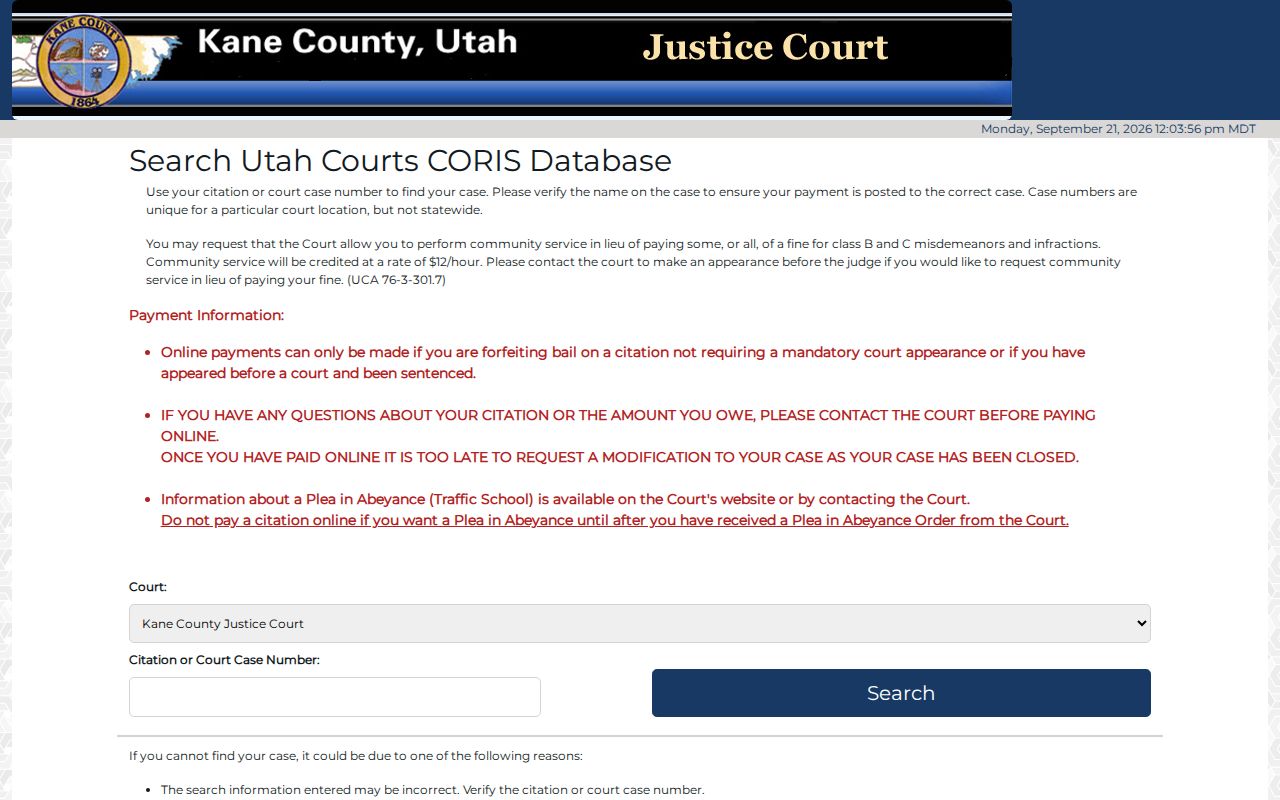
The image shows an empty search form, not a citation or a person’s data.
Checking for a Traffic Warrant
Use the citation number or court case number in the CORIS form, then call the selected court to confirm any warrant event and required action. If no case appears, the official page says the citation may not yet be filed, the number may be wrong, or no money may be owed.
- Choose the court shown on the citation in the CORIS form.
- Enter the citation or court case number and check the name on the result.
- Call Kane County Justice Court at 435-644-2351 or Orderville Justice Court at 435-648-2534 for routing.
- If a case requires an appearance or a warrant is reported, ask the clerk what to do and speak with counsel about legal advice.
Kane County Municipal Traffic Warrants Route Glendale Through Orderville
Official Utah Courts materials route Glendale to Orderville Municipal Justice Court for the small-claims map, and Kane’s justice-court page lists an Orderville court contact. Confirm the exact case type and counter before visiting because a separate street address for the court was not identified in the research.
For Kanab, Alton, and many other county traffic matters, Kane County Justice Court is the main lower-court route. Big Water’s former justice-court caseload transferred there as well.
See the Utah Courts location map for the Glendale routing note.
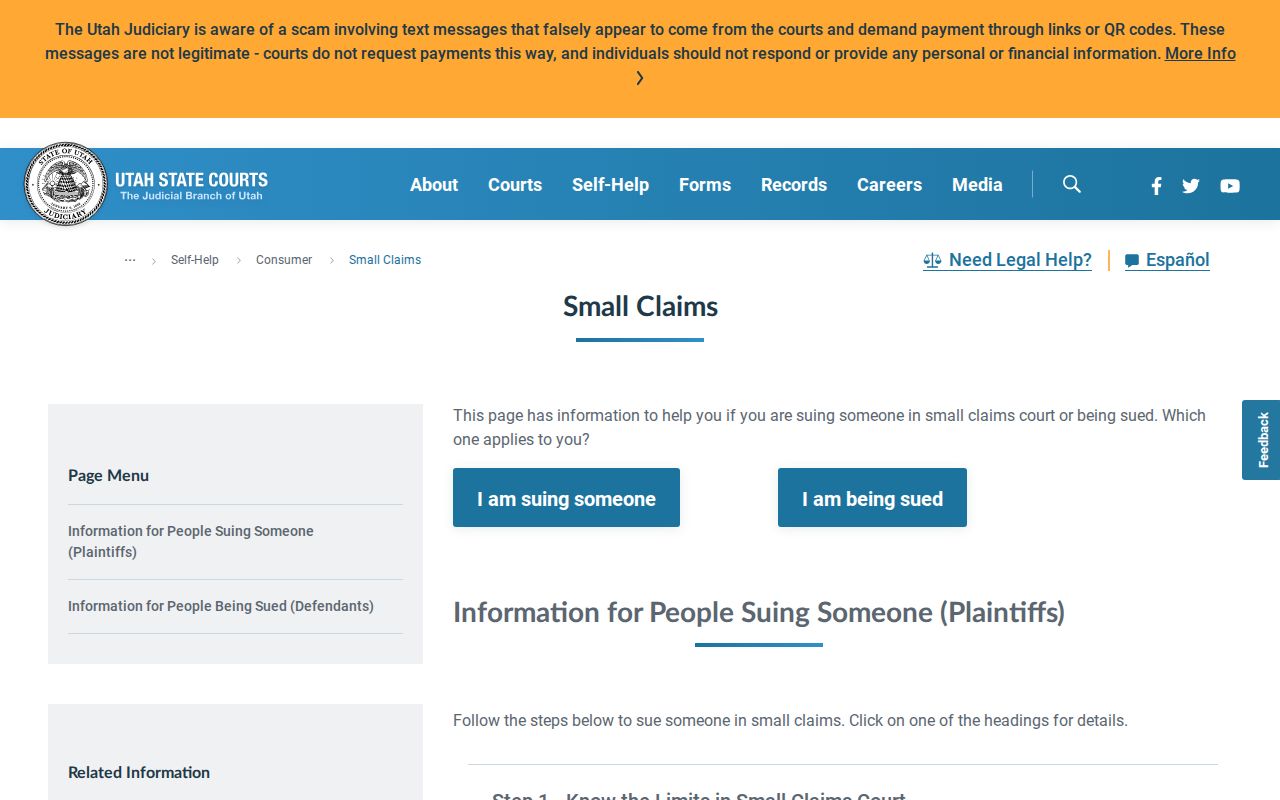
Routing can depend on the municipality and the type of case.
Inside a Traffic Warrant Record
The CORIS search is a citation and case lookup, not a warrant-specific record display. A result can help identify the court and case number; the clerk confirms the warrant event, amount, and any required appearance. Do not assume the search exposes every court field.
| Court | Select the court location before searching. |
|---|---|
| Citation or case number | Enter the number printed on the citation or court record. |
| Case status | Ask the clerk whether a warrant is active or recalled. |
| Payment terms | Confirm whether the citation qualifies for online payment before paying. |
| Next action | Check whether the court requires an appearance, motion, or other step. |
Kane County Traffic Warrant Plea in Abeyance Has Limits
Kane County offers a Plea in Abeyance request and terms for qualifying traffic matters. The form asks for the citation or case number, party contact information, attorney or waiver, signature, and certifications. The terms set eligibility rules, a six-month compliance period, and a $25 addition to the recommended fine.
This is not a blanket warrant recall or amnesty. Ask the court whether the case qualifies and whether a separate warrant action is needed before filing.
The county form and terms are linked from the Justice Court page.
How to Pay or Lift a Traffic Warrant
Call the issuing clerk before paying online. CORIS limits online payment to qualifying citations without a mandatory appearance or to payment after appearance and sentencing. Once paid, the case closes, and a payment may be treated as bail forfeiture or conviction. A warrant may require a separate court action.
- Ask the issuing court to confirm the citation, warrant status, and exact case instructions.
- Ask whether payment is allowed or an appearance or motion is required.
- If the court approves a payment or plea-in-abeyance path, follow its form and timing rules.
- Keep confirmation and ask when the state file should reflect the court’s action.
Warning: Do not pay a citation until the issuing court confirms that online payment is allowed and explains whether a separate warrant step remains.
Kane County Traffic Warrant Payment Can Close the Case
The CORIS page says qualifying online payment closes the citation case. It may count as bail forfeiture or conviction, so the person should contact the court first when a mandatory appearance or warrant exists. The search result alone does not explain the full legal effect.
If a request for plea in abeyance is being prepared, the terms warn that online payment before the court receives and processes it may be treated as a conviction. Ask the clerk whether the court has accepted the filing.
Traffic Warrants, FTA, and License Holds
A missed citation event is not the same as the warrant or a separate state record. Utah law uses bench warrant as the public term for a citation FTA consequence. Confirm with the issuing court whether the case has a warrant, a payment balance, or another hold before taking action.
| Mechanism | What Triggers It | What It Does |
|---|---|---|
| Bench warrant | Failure to appear or pay as required by a citation. | Court order tied to the underlying case. |
| FTA event | A missed court date or other required citation event. | May lead to a bench warrant under §77-7-19. |
| Other hold | A separate agency or court action, if applicable. | Ask the court which record and office control it. |
Kane County Traffic Warrants Enter State File
Utah’s Statewide Warrants system includes traffic-citation failure-to-appear warrants, but the entry and removal timing depends on court updates. A missing result does not prove that a citation is settled. Xchange can supply public case events, while CORIS can locate some citations; neither replaces the issuing court’s confirmation.
For a current question, call the court printed on the case and ask when to recheck the state file after the court acts.